
In recent years, there has been a significant advancement in the field of Artificial Intelligence (AI) and Augmented Reality (AR). These technologies have become increasingly popular and have the potential to enhance virtual experiences in various fields such as gaming, education, healthcare, and...
How Smart Footwear Corrects Gait and Protects the Knees
70
13.09.2026
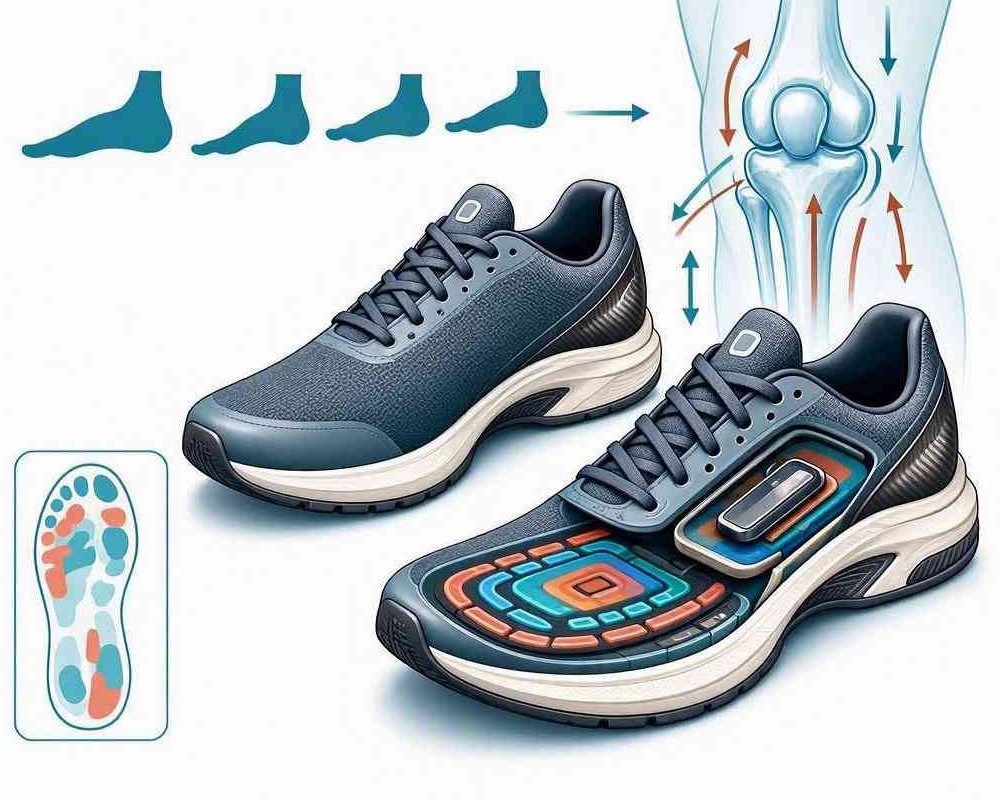
Walking and running place repeated loads on the knees. When the feet roll excessively, stride length is uneven, or body weight shifts incorrectly, those forces can increase stress on cartilage, ligaments, and tendons. Smart footwear combines wearable sensors, data analysis, and personalized feedback to identify such movement patterns. Although no shoe can guarantee injury prevention, these systems may help users improve gait mechanics and address risk factors before pain or tissue damage develops.
What Makes Footwear “Smart”?
Smart footwear includes pressure sensors, accelerometers, gyroscopes, or inertial measurement units embedded in shoes or removable insoles. As a person walks, runs, or trains, the sensors measure foot pressure, speed, impact, balance, and movement direction. The collected information is usually transferred to a mobile application or clinical platform, where software converts raw signals into understandable gait metrics.
Pressure and Load Monitoring
Pressure sensors show how weight travels from the heel through the midfoot to the toes. They can reveal asymmetry between the left and right sides, excessive loading on one part of the foot, or an unstable push-off. Because poor load distribution may alter knee alignment, identifying these patterns can support more targeted footwear choices, exercises, or rehabilitation plans.
Motion and Impact Analysis
Accelerometers and gyroscopes track cadence, ground-contact time, foot angle, and impact intensity. Some devices can detect overstriding, reduced stability, or rapid inward movement of the foot. These findings provide more detail than distance and step counts from conventional fitness trackers. However, sensor accuracy varies, so consumer data should not automatically be treated as a medical diagnosis.
How Smart Shoes Can Improve Gait
Measurement alone does not correct movement. The practical benefit comes from feedback that helps a user change an unsafe or inefficient habit. Depending on the product, feedback may appear as an app notification, an audio coaching cue, or a gentle vibration in the shoe.
- Cadence guidance may help runners avoid an excessively long stride.
- Balance alerts can highlight persistent left-to-right loading differences.
- Impact monitoring may encourage softer landings and gradual training progression.
- Trend reports can show whether rehabilitation exercises are improving movement consistency.
Personalization Matters
There is no single ideal gait for everyone. Height, anatomy, previous injuries, mobility, training surface, and activity level all affect movement. Effective smart footwear establishes an individual baseline and tracks changes over time. Recommendations based only on population averages may be less useful and could encourage unnecessary gait modification.
The Connection Between Gait and Knee Injuries
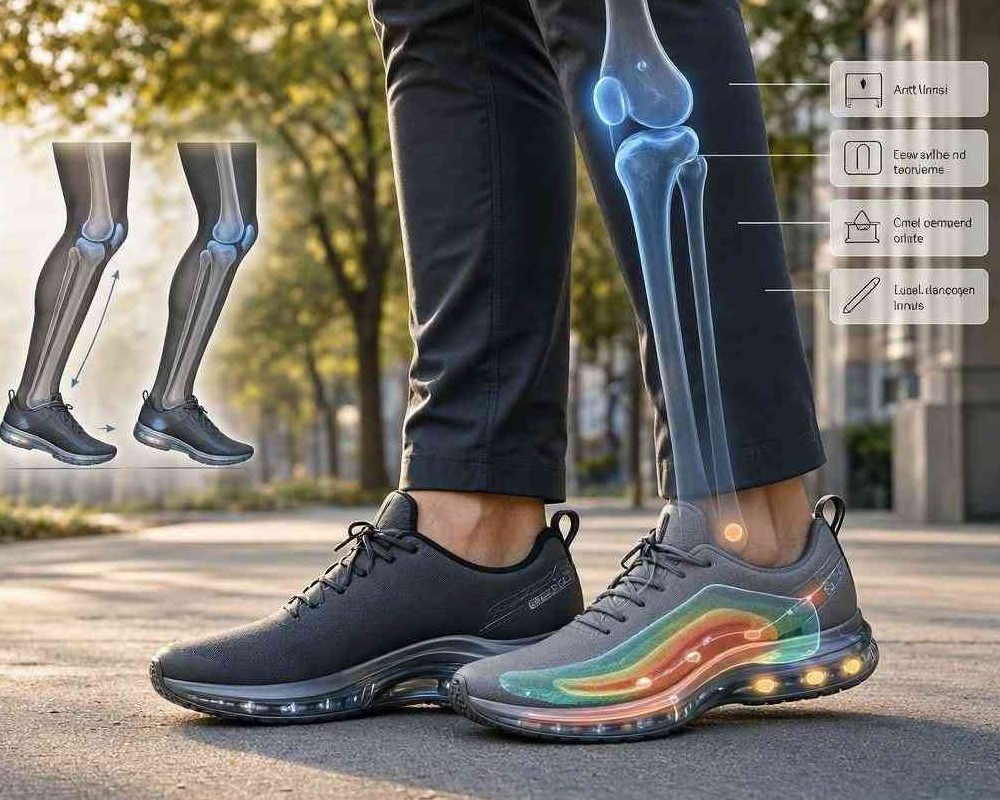
The knee absorbs and transfers force during every step. Excessive impact, sudden increases in running volume, weak hip muscles, limited ankle mobility, and poor lower-limb alignment can increase injury risk. By documenting impact and asymmetry, smart footwear may reveal warning signs associated with overuse conditions, including patellofemoral pain and irritation of surrounding tendons.
Early detection allows athletes and everyday users to adjust training load, improve strength, or seek professional assessment. Smart shoes are most valuable as part of a broader prevention strategy rather than as a substitute for conditioning, recovery, and appropriate medical care.
How to Use Smart Footwear Safely
- Choose a device that measures relevant metrics and explains how accuracy was tested.
- Record several normal sessions before making significant changes to stride or technique.
- Increase walking or running volume gradually, even when gait data appears favorable.
- Share persistent asymmetry, pain, swelling, or instability with a physiotherapist, podiatrist, or sports physician.
Who May Benefit Most?
Smart footwear may be useful for runners managing training load, older adults monitoring balance, patients completing lower-limb rehabilitation, and workers who spend long periods standing or walking. It can also give clinicians objective information between appointments. People with acute pain or a diagnosed joint condition should obtain professional guidance before relying on automated coaching.
A Useful Tool, Not a Complete Solution
Smart footwear turns daily movement into actionable data, making subtle gait changes easier to recognize. Its ability to support knee injury prevention depends on sensor quality, correct interpretation, and consistent user behavior. Combined with strength training, suitable shoes, adequate recovery, and expert assessment when needed, it can become a practical tool for safer and more efficient movement.