

In recent years, there has been a significant advancement in the field of Artificial Intelligence (AI) and Augmented Reality (AR). These technologies have become increasingly popular and have the potential to enhance virtual experiences in various fields such as gaming, education, healthcare, and...
How an Algorithm Selects the Optimal Fertilizer Composition for a Specific Crop Variety
11
23.09.2026
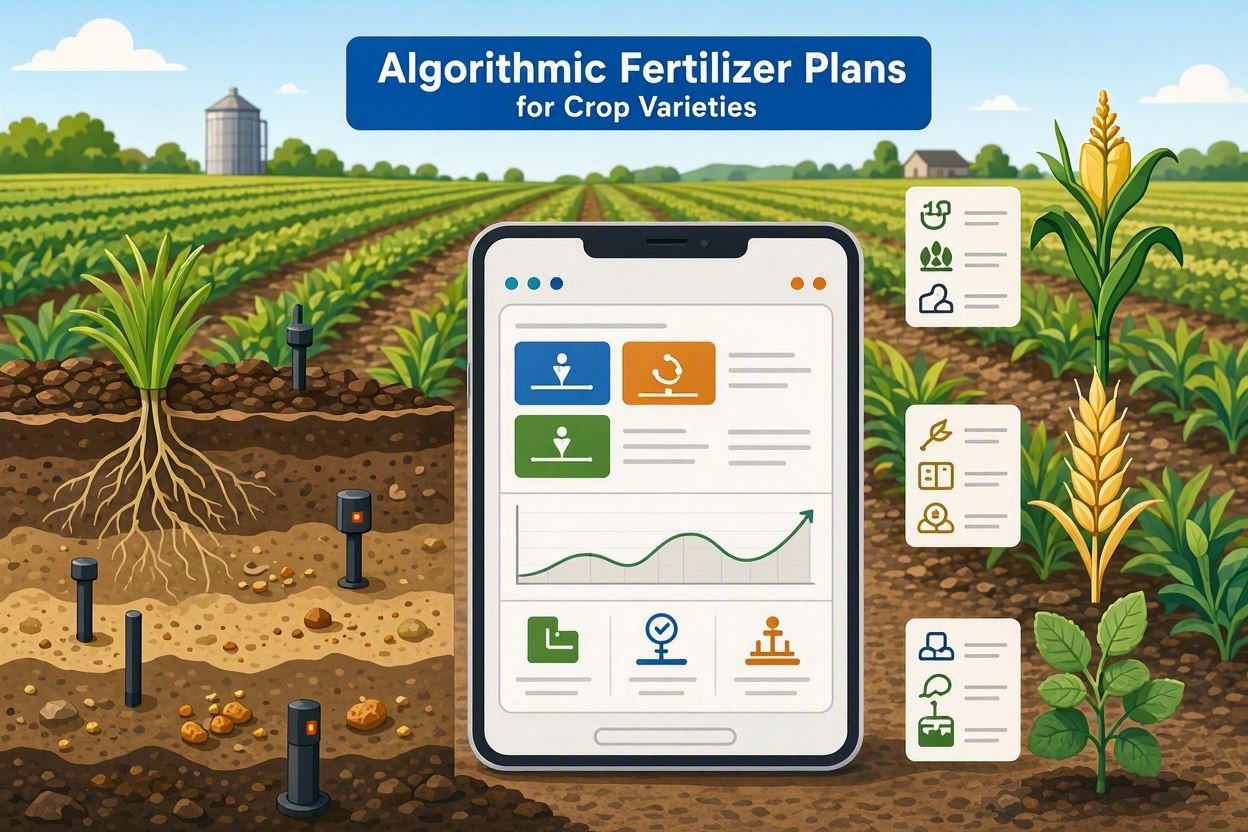
Fertilizer planning is no longer limited to broad recommendations such as “apply nitrogen in spring” or “add potassium before flowering.” Modern agriculture increasingly relies on data-driven systems that match nutrient supply to the exact needs of a crop variety, field condition, and production goal. An algorithm that selects the optimal fertilizer composition can reduce waste, improve yield stability, and support more sustainable farming decisions.
Why Variety-Specific Fertilization Matters
Even within the same crop species, varieties can differ significantly in nutrient demand. A high-protein wheat variety may require a different nitrogen strategy than a variety bred mainly for drought tolerance. A tomato hybrid developed for greenhouse production may respond differently to calcium, magnesium, and micronutrients than an open-field variety. Treating all varieties alike can lead to underfeeding, overfertilization, nutrient imbalance, or quality losses.
An algorithm helps solve this problem by combining agronomic knowledge with field-specific data. Instead of relying on a fixed formula, it estimates what the plant needs, what the soil can provide, and what must be supplied through fertilizers at each growth stage.
Key Data Used by the Algorithm
Soil Nutrient Profile
The first input is usually a soil test. The algorithm evaluates available nitrogen, phosphorus, potassium, sulfur, calcium, magnesium, and key micronutrients such as zinc, boron, manganese, iron, and copper. It also considers soil pH, organic matter, cation exchange capacity, salinity, and texture. These parameters influence how nutrients are retained, released, or lost through leaching and fixation.
Crop Variety Requirements
Each variety has a target nutrient uptake curve. The algorithm uses this curve to estimate how much of each nutrient is needed during vegetative growth, flowering, fruiting, grain filling, or root development. It may also include breeder data, local trial results, and historical farm performance to refine recommendations.
Weather and Irrigation Conditions
Rainfall, temperature, evapotranspiration, and irrigation frequency affect nutrient availability. Heavy rain can move nitrate below the root zone, while drought can reduce uptake even when nutrients are present in the soil. By integrating weather data, the algorithm can adjust timing and application method, not just the fertilizer recipe.
How the Selection Process Works
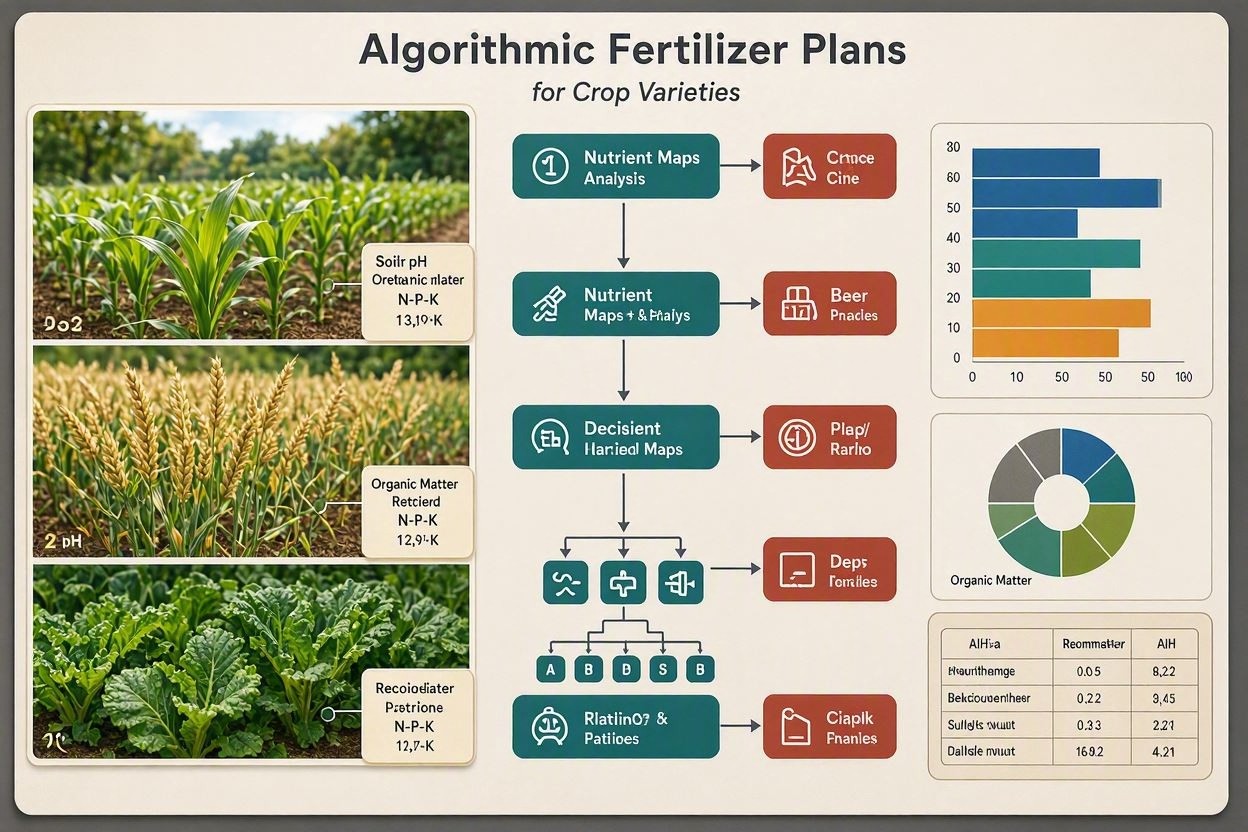
The algorithm typically follows a structured decision pathway. It compares crop demand with soil supply, calculates nutrient deficits, and then searches for a fertilizer blend that meets those deficits without exceeding safe limits. It also checks compatibility between fertilizer sources, application equipment, and agronomic constraints.
- Define the crop variety, expected yield, and quality target.
- Analyze soil test results and estimate native nutrient supply.
- Calculate nutrient demand by growth stage.
- Identify deficiencies, excesses, and potential antagonisms.
- Select fertilizer sources and application rates.
- Optimize timing, placement, and method of application.
- Update recommendations when new field or sensor data becomes available.
Balancing Yield, Cost, and Sustainability
A strong algorithm does not simply maximize fertilizer input. It balances agronomic response, cost efficiency, and environmental risk. For example, if additional phosphorus is unlikely to increase yield because soil levels are already sufficient, the system should avoid unnecessary application. If nitrogen is needed but leaching risk is high, it may recommend split applications, stabilized nitrogen products, fertigation, or controlled-release fertilizers.
This optimization is especially valuable when fertilizer prices fluctuate. The algorithm can compare multiple nutrient sources and choose the most economical combination that still meets crop needs. It can also account for organic amendments such as compost, manure, digestate, or cover crop residues, converting their nutrient contribution into the final plan.
Common Outputs of a Fertilizer Recommendation System
Custom Nutrient Formula
The system may generate a precise N-P-K ratio plus secondary nutrients and micronutrients. For example, one variety may need additional potassium during fruit sizing, while another may require boron before flowering to support reproductive development.
Application Schedule
The recommendation usually includes when to apply each fertilizer. Timing is critical because nutrient demand changes rapidly during the season. Supplying the right element too early or too late can reduce efficiency.
Field-Level Adjustments
Advanced systems can create variable-rate maps for different zones within the same field. Sandy areas, compacted zones, or low-organic-matter sections may need different rates than heavier or more fertile parts of the field.
Practical Benefits for Growers
- More accurate nutrient management for specific crop genetics.
- Reduced fertilizer waste and lower input costs.
- Improved yield consistency and crop quality.
- Lower risk of nutrient runoff, leaching, and soil degradation.
- Better documentation for audits, certifications, and sustainability programs.
Conclusion
An algorithm that selects the optimal fertilizer composition for a specific crop variety turns nutrient management into a precise, adaptive process. By analyzing soil chemistry, crop genetics, climate, yield goals, and economic constraints, it can recommend a fertilizer plan that is both productive and responsible. As farms adopt more sensors, digital records, and decision-support tools, variety-specific fertilization will become a core element of efficient crop production.