

In recent years, there has been a significant advancement in the field of Artificial Intelligence (AI) and Augmented Reality (AR). These technologies have become increasingly popular and have the potential to enhance virtual experiences in various fields such as gaming, education, healthcare, and...
AI Automatically Translates Subtitles While Accounting for Cultural Nuances
46
14.09.2026
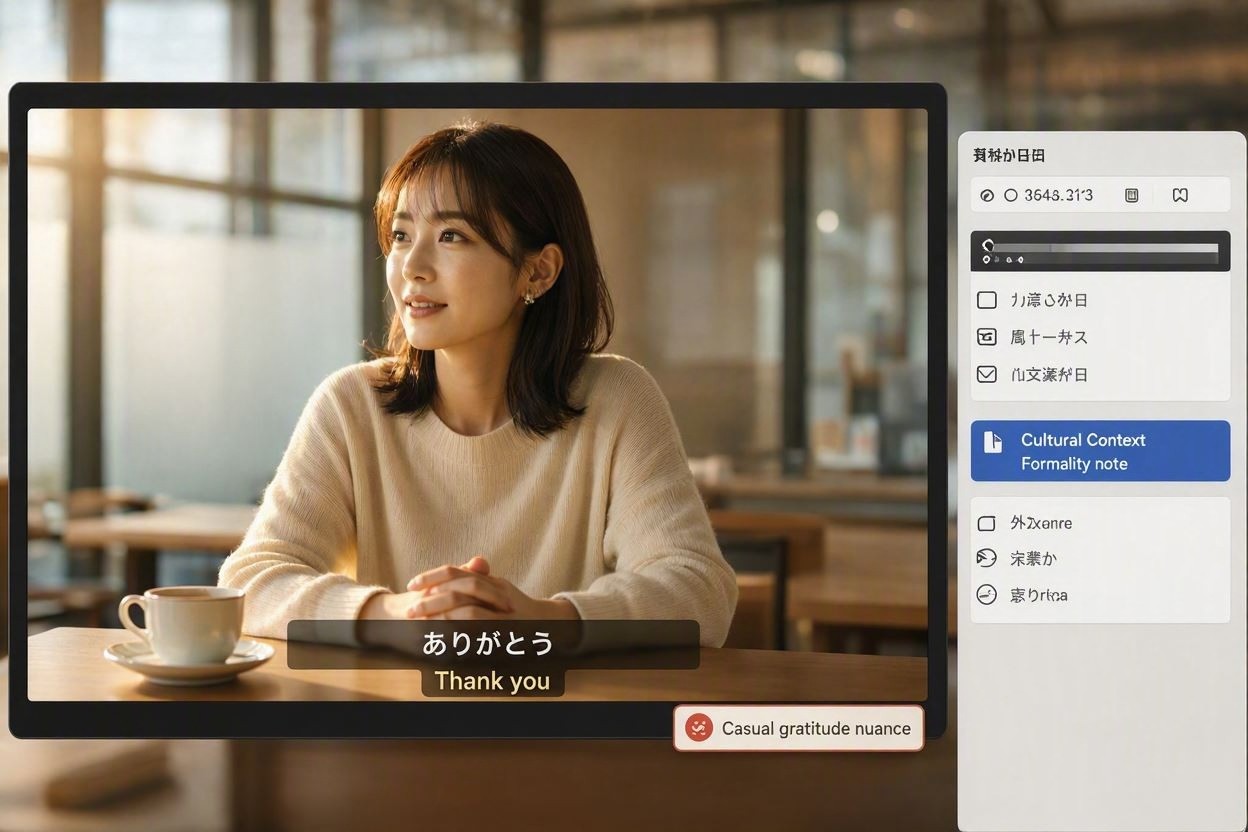
Automatic subtitle translation has moved far beyond word-for-word conversion. Modern AI systems can analyze dialogue, speaker intent, genre, audience expectations, and cultural references to produce subtitles that feel natural in the target language. This matters because subtitles are not only a linguistic tool; they are part of the viewing experience. A good subtitle must be accurate, readable, emotionally faithful, and culturally appropriate within a very small space and time window.
Why Cultural Nuance Matters in Subtitle Translation
Literal translation often fails when content includes humor, idioms, slang, politeness levels, regional references, or emotionally loaded expressions. A phrase that sounds casual in one culture may seem rude in another. A joke based on a local celebrity, historical event, or food tradition may be meaningless to international viewers. AI subtitle translation must therefore adapt meaning, not merely replace words.
For example, an English phrase such as “break a leg” should not be translated as a physical injury in most languages. It should become the equivalent expression for wishing someone success. Similarly, honorifics in Korean or Japanese, forms of address in Spanish, and levels of formality in German or French can change how viewers understand relationships between characters.
How AI Understands Context
Natural Language Processing and Scene Awareness
Advanced subtitle systems use natural language processing to identify grammar, sentiment, intent, and discourse flow. They consider previous and following lines to avoid mistranslating ambiguous words. If a character says “That was cold,” AI must determine whether the speaker means temperature, emotional cruelty, or a surprising action. Context makes the difference.
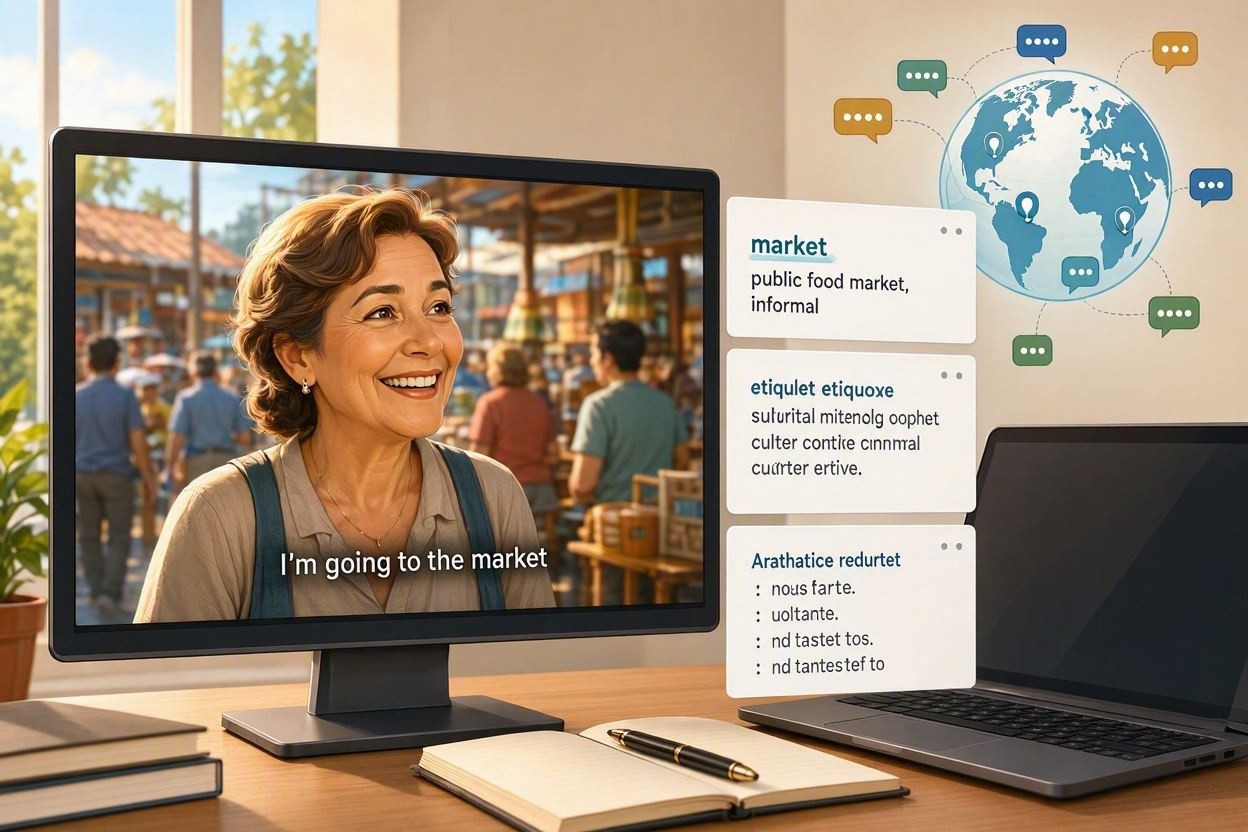
Some platforms also combine speech recognition, speaker identification, and visual scene analysis. When AI detects who is speaking, whether the tone is sarcastic, and what is happening on screen, it can produce more accurate subtitles. This is especially useful in fast dialogue, documentaries, reality shows, and comedy, where meaning often depends on timing and visual cues.
Training on Multilingual and Cultural Data
AI models learn from large collections of translated scripts, localized films, parallel corpora, and professional subtitle datasets. The best systems are trained not only on language pairs but also on localization patterns. They learn when to keep a cultural reference, when to explain it briefly, and when to replace it with a more familiar equivalent.
Key Challenges in AI Subtitle Localization
Humor, Idioms, and Wordplay
Comedy is one of the hardest areas for AI because jokes rely on double meanings, rhythm, taboo, exaggeration, or shared cultural knowledge. A pun may be impossible to translate directly. In such cases, AI may suggest a different joke that creates a similar effect. This is not a loss of accuracy; it is a form of creative equivalence.
Reading Speed and Character Limits
Subtitles must fit on screen for only a few seconds. Even if a long translation is technically correct, viewers may not have time to read it. AI tools optimize subtitles by shortening sentences, removing repetition, and preserving the core meaning. This is essential for mobile viewing, streaming platforms, and accessibility.
Regional Variants and Audience Expectations
Spanish for Mexico, Spain, and Argentina can differ significantly. Arabic, Portuguese, French, and English also have regional variants. AI subtitle translation must choose vocabulary, tone, and expressions that match the intended market. A neutral global version may work for corporate training, while entertainment content often benefits from region-specific localization.
Best Practices for AI-Generated Subtitles
AI can dramatically accelerate subtitle translation, but the best results usually come from combining automation with human review. Professional linguists, editors, and cultural consultants can refine tone, confirm sensitive references, and ensure that subtitles match brand or platform standards.
- Use AI tools that support context-aware translation, not only sentence-by-sentence output.
- Define the target region, audience age, and preferred formality level before translation begins.
- Review idioms, jokes, songs, slang, and culturally sensitive terms manually.
- Check subtitle timing, line breaks, and reading speed after translation.
- Maintain glossaries for recurring names, terms, catchphrases, and brand language.
Benefits for Media, Education, and Business
For streaming platforms, AI subtitle translation reduces localization time and helps content reach global audiences faster. For educators, it makes lectures, tutorials, and training materials accessible to multilingual learners. For businesses, it supports international marketing, product demos, webinars, and internal communications without the high cost of fully manual translation for every asset.
Another major advantage is scalability. A company can translate hundreds of hours of video into multiple languages while keeping terminology consistent. AI can also update subtitles quickly when source content changes, which is valuable for compliance training, software tutorials, and news-related media.
The Future of Culturally Aware Subtitle AI
The next generation of AI subtitle translation will become more multimodal and adaptive. Systems will better understand facial expressions, background music, viewer demographics, and genre conventions. They may offer several subtitle styles, such as literal, localized, simplified, or humorous, depending on user preference.
However, cultural nuance will remain a shared responsibility between technology and human expertise. AI can process enormous amounts of language data and propose strong translations at speed, but human reviewers provide judgment, empathy, and cultural sensitivity. Together, they can create subtitles that preserve meaning, emotion, and authenticity across borders.
When used thoughtfully, AI does more than translate subtitles automatically. It helps stories travel, makes knowledge more accessible, and allows audiences to experience content in a way that feels natural, respectful, and culturally alive.